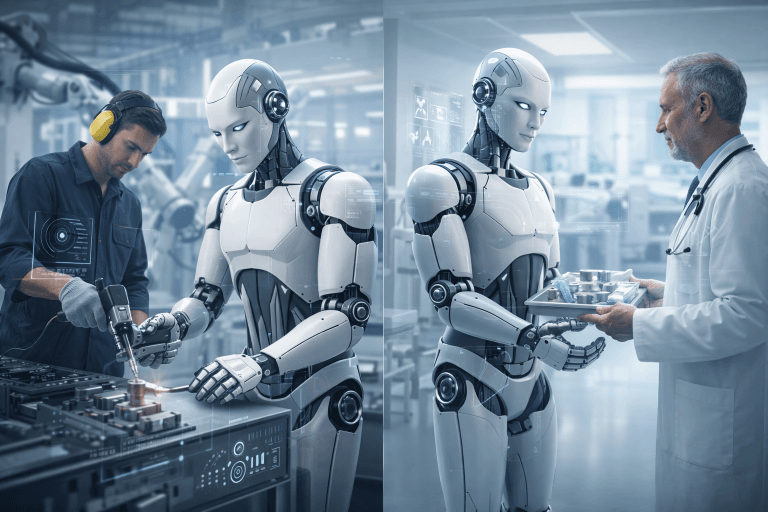

‘Physical AI’ and Humanoid Robots Shift From Hype to Real Deployment
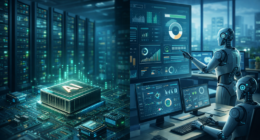
For years, humanoid robots and so-called “Physical AI” existed largely in demo videos, research labs, and futuristic keynote presentations. In 2026, that narrative is changing fast. What was once viewed as speculative hype is now moving into real-world deployment, driven by advances in artificial intelligence, sensors, batteries, and robotics hardware.
From factories and warehouses to hospitals and public spaces, Physical AI systems—AI that directly interacts with the physical world—are beginning to show measurable economic value.
What Is ‘Physical AI’?
Beyond Software-Based Artificial Intelligence
Physical AI refers to artificial intelligence systems that perceive, reason, and act in the physical environment. Unlike traditional AI models that operate purely in digital space—such as chatbots or recommendation engines—Physical AI is embedded in machines that move, manipulate objects, and interact with humans.
Humanoid robots are one of the most visible expressions of this trend, but Physical AI also includes:
- Autonomous mobile robots
- Robotic arms with AI-driven vision
- Smart industrial machines
- AI-powered service robots
The key difference is autonomy in the real world, not just decision-making on a screen.
Why Humanoid Robots Are Suddenly Becoming Practical
Hardware Has Finally Caught Up
For years, the biggest barrier to humanoid robots was not intelligence—but hardware. Motors were inefficient, sensors were expensive, and batteries lacked sufficient energy density. In 2026, those constraints are easing.
Key improvements include:
- Cheaper and more precise sensors (vision, depth, touch)
- Stronger yet lighter actuators
- Better battery life and power management
- Edge AI chips capable of real-time inference
These advances allow robots to operate longer, move more naturally, and react safely in human environments.
AI Models Can Now Understand the Physical World
Modern AI models are no longer limited to recognizing images or text. They can now:
- Understand spatial relationships
- Predict physical outcomes
- Learn complex motor tasks through simulation
- Adapt to new environments without full retraining
This leap—from narrow automation to general physical reasoning—is what enables humanoid robots to perform useful, repeatable tasks outside controlled labs.
https://goldenraysnews.com/ces-2026-shows-the-next-ai-leap/
From Demos to Deployment: Where Robots Are Being Used
Manufacturing and Warehousing
Factories and logistics centers are among the first beneficiaries of Physical AI. Humanoid robots are being tested for tasks such as:
- Material handling
- Assembly assistance
- Equipment inspection
- Warehouse picking and sorting
Unlike traditional industrial robots, humanoid forms can operate in spaces designed for humans—reducing the need to redesign facilities.
Healthcare and Assisted Living
In healthcare, Physical AI is beginning to support—not replace—human workers. Robots are being deployed for:
- Transporting supplies and medications
- Assisting patients with mobility
- Monitoring vital signs
- Performing repetitive, non-clinical tasks
With aging populations in many countries, humanoid robots are increasingly viewed as a solution to labor shortages rather than a novelty.
Public Spaces and Services
Airports, hotels, and retail environments are experimenting with humanoid and service robots for:
- Customer guidance
- Security patrols
- Cleaning and maintenance
- Information services
While still limited in scope, these deployments demonstrate that robots can operate safely around large numbers of people.
https://goldenraysnews.com/nvidias-h200-ai-chips-to-china-spark-new-u-s-backlash/
Why the Hype Cycle Is Breaking
Clear Return on Investment (ROI)
Earlier waves of robotics hype failed because the technology did not deliver measurable economic benefits. Today, companies are deploying robots because they:
- Reduce labor costs
- Improve operational consistency
- Operate 24/7 without fatigue
- Fill roles with persistent labor shortages
As soon as CFOs can quantify value, hype gives way to adoption.
Software-Defined Robotics
Another major shift is the rise of software-defined robots. Instead of hardcoding behavior, robots now improve through software updates, model upgrades, and cloud-connected learning.
This means:
- Faster iteration cycles
- Lower long-term costs
- Continuous improvement after deployment
Robots are no longer “finished products” at launch—they evolve.
https://goldenraysnews.com/markets-rebound-as-trump-walks-back-tariff-threats/
Challenges That Still Remain
Safety and Trust
Deploying humanoid robots in public and workplaces raises legitimate concerns:
- Human safety
- System reliability
- Decision transparency
- Liability in case of failure
Regulators and companies are still developing frameworks to ensure safe interaction between humans and autonomous machines.
Cost and Scalability
Despite progress, humanoid robots remain expensive. Large-scale deployment will depend on:
- Further cost reductions
- Standardized hardware platforms
- Mature supply chains
Early adoption is concentrated among large enterprises with the resources to absorb initial costs.
The Broader Impact on Work and Society
Augmentation, Not Replacement
Despite fears of job loss, most real-world deployments focus on augmentation rather than replacement. Robots handle repetitive or physically demanding tasks, allowing humans to focus on higher-value work.
In many sectors, robots are filling roles that already struggle with worker shortages.
A New Human-Machine Relationship
As Physical AI becomes more common, society is adjusting to a new relationship with machines—one where robots are collaborators rather than tools. This shift will influence:
- Workplace design
- Skill requirements
- Education and training
Understanding how to work alongside intelligent machines is becoming a core competency.
https://goldenraysnews.com/crypto-etfs-enter-2026-with-regulatory-tailwinds/
What Comes Next for Physical AI?
Rapid Iteration in the Next 3–5 Years
The next phase will likely see:
- Faster deployment cycles
- Narrower but more reliable use cases
- Increased specialization of humanoid robots
- Stronger integration with enterprise software systems
Rather than general-purpose “do everything” robots, the market is moving toward task-focused Physical AI that excels in specific environments.
Conclusion: From Vision to Reality
Physical AI and humanoid robots are no longer confined to hype-driven headlines. In 2026, they are transitioning into real, economically justified deployments across industry, healthcare, and public services.
While challenges remain, the combination of advanced AI, improved hardware, and clear business value is pushing humanoid robots out of the lab and into everyday operations. The age of Physical AI isn’t arriving someday—it’s already underway.






16 comments
Thanks.
Thanks.🍀
D😊
Good Opinion
Physical AI and humanoid robots are good and helpful for our future.
They should support and assist humans.
But should not replace humans.
Robots are no longer “finished products” at launch—they evolve.
Thanks for sharing
Thanks lots 😍
Like
Hi
Thank you for sharing your knowledge.😘😘
Haha
Thank for knowledge.
Thqnks
Appreciating the time and energy you put into your website and detailed information you offer.
It’s good to come across a blog every once in a while that isn’t the same old rehashed material.
Fantastic read! I’ve saved your site and I’m adding your RSS feeds to my Google account.