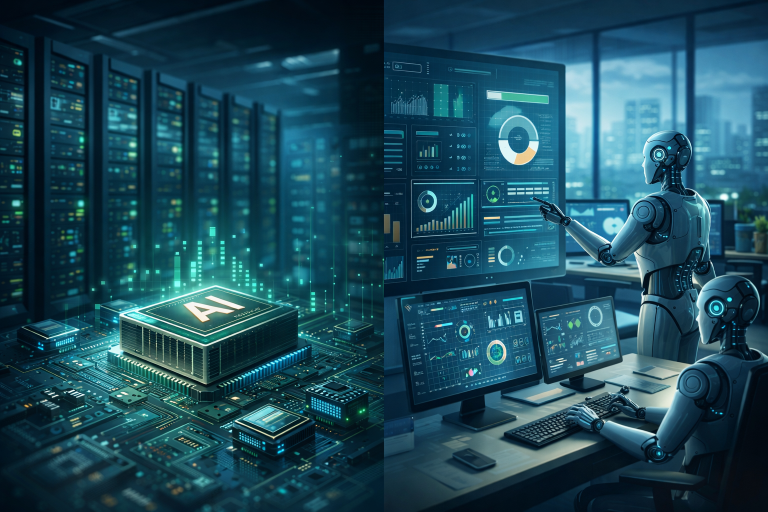
Nvidia Pushes AI Inference While Alibaba Expands Enterprise Agents
The global artificial intelligence race is entering a new phase as Nvidia doubles down on AI inference capabilities, while Alibaba Group accelerates its push into enterprise AI agents. Together, these developments highlight a broader shift in the AI ecosystem—from model training dominance to real-world deployment and enterprise integration.
As competition intensifies, the focus is no longer just on building larger models but on making AI more efficient, scalable, and commercially viable.
The Shift From Training to Inference
Why AI Inference Is the Next Battleground
For the past several years, AI innovation has been driven largely by model training—building increasingly large and complex systems. However, the next phase of growth lies in inference, where trained models are deployed to perform real-time tasks.
AI inference includes:
- Generating responses in chatbots
- Processing enterprise workflows
- Running real-time analytics
- Powering recommendation systems
Inference workloads occur far more frequently than training, making them critical for long-term revenue generation.
Nvidia’s Strategic Focus on Inference
Nvidia, long known for dominating AI training hardware, is now aggressively targeting inference workloads. Its latest chips and software platforms are optimized to deliver:
- Lower latency
- Higher throughput
- Improved energy efficiency
This shift reflects a key reality: as AI adoption grows, inference demand will far exceed training demand.
By optimizing hardware and software for inference, Nvidia aims to:
- Capture a larger share of enterprise AI spending
- Reduce total cost of ownership for customers
- Strengthen its ecosystem across data centers and edge devices
Nvidia’s Expanding AI Ecosystem
Hardware Meets Software Integration
Nvidia’s advantage lies not just in hardware, but in its integrated ecosystem. Through platforms like CUDA and AI inference frameworks, the company provides developers with tools to deploy models efficiently across different environments.
This ecosystem approach enables:
- Seamless scaling from cloud to edge
- Faster deployment of AI applications
- Optimization across diverse workloads
As enterprises prioritize cost efficiency, Nvidia’s ability to deliver end-to-end solutions becomes a key differentiator.
Competition in the AI Chip Market
While Nvidia remains a leader, competition is intensifying. Cloud providers and semiconductor companies are developing custom AI chips to reduce reliance on external suppliers.
However, Nvidia’s early-mover advantage and strong developer ecosystem continue to give it a significant edge—particularly in inference optimization.
Alibaba’s Push Into Enterprise AI Agents
What Are Enterprise AI Agents?
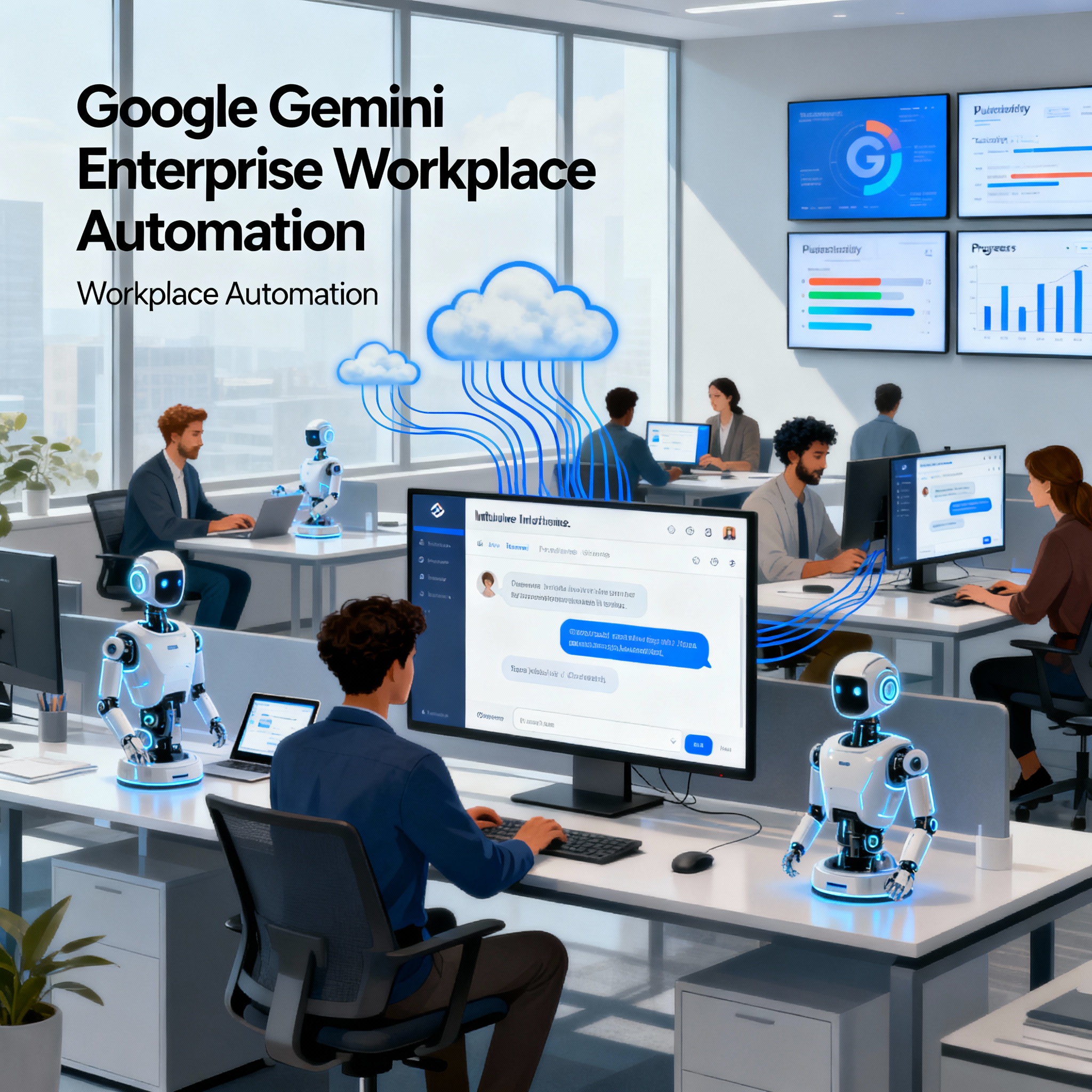
While Nvidia focuses on infrastructure, Alibaba is advancing the application layer with enterprise AI agents—autonomous systems designed to perform tasks across business environments.
These agents can:
- Automate workflows
- Handle customer interactions
- Analyze business data
- Execute multi-step tasks
Unlike traditional software tools, AI agents can adapt, learn, and operate with minimal human intervention.
Alibaba’s Strategic Expansion
Alibaba is integrating AI agents into its cloud and enterprise platforms, targeting businesses looking to improve efficiency and reduce operational costs.
By embedding AI into enterprise systems, Alibaba aims to:
- Expand its cloud computing market share
- Strengthen customer retention
- Drive adoption of AI-powered services
This strategy aligns with a broader trend toward “AI-first” enterprise software.
Why Enterprise AI Is Gaining Momentum
Real-World Use Cases Are Expanding
Enterprises are increasingly adopting AI to:
- Automate repetitive tasks
- Improve decision-making
- Enhance customer experiences
- Reduce operational costs
AI agents represent the next step in this evolution, moving beyond simple automation to intelligent execution.
https://goldenraysnews.com/samsung-ships-hbm4-memory-chips-in-the-ai-race/
Cost Efficiency and Scalability
Businesses are under pressure to improve efficiency while managing costs. AI agents offer:
- 24/7 operation
- Reduced reliance on manual labor
- Scalable performance across large organizations
As a result, enterprise AI adoption is accelerating across industries.
https://goldenraysnews.com/ces-2026-shows-the-next-ai-leap/
How Nvidia and Alibaba Strategies Converge
Infrastructure Meets Application
Nvidia and Alibaba operate at different layers of the AI stack:
- Nvidia provides the hardware and infrastructure
- Alibaba delivers applications and enterprise solutions
Together, they represent the two pillars of the AI ecosystem:
- Compute power (inference and training)
- Practical deployment (enterprise use cases)
The success of AI depends on both layers working together.
The Rise of Full-Stack AI Ecosystems
The industry is moving toward full-stack AI platforms that combine:
- Hardware
- Software frameworks
- Cloud services
- Application-level tools
Companies that can integrate these elements effectively will be best positioned to capture long-term value.
Implications for the AI Market
A New Phase of Monetization
The shift toward inference and enterprise AI signals a transition from experimentation to monetization. Businesses are no longer just testing AI—they are deploying it at scale.
This creates new revenue opportunities in:
- AI infrastructure
- Cloud services
- Enterprise software
- Edge computing
Global Competition Intensifies
The AI race is increasingly global, with companies in the United States and China pursuing different strategies. Nvidia’s hardware leadership and Alibaba’s enterprise focus illustrate how competition is unfolding across multiple dimensions.
Geopolitical factors, supply chains, and regulatory environments will also play a role in shaping the future of the industry.
https://goldenraysnews.com/physical-ai-and-humanoid-robots-shift-from-hype-to-real-deployment/
What Investors Should Watch
Key Trends to Monitor
Investors should focus on:
- Growth in AI inference demand
- Adoption of enterprise AI agents
- Competition in AI hardware and cloud services
- Partnerships between infrastructure and application providers
These trends will determine which companies lead the next phase of AI development.
Conclusion: AI Moves From Hype to Deployment
Nvidia’s push into AI inference and Alibaba’s expansion of enterprise AI agents highlight a critical shift in the artificial intelligence landscape. The focus is moving away from building bigger models toward deploying smarter, more efficient systems in real-world environments.
As AI adoption accelerates, the companies that can deliver both powerful infrastructure and practical applications will shape the future of the industry. The race is no longer just about innovation—it’s about execution at scale.





4 comments
Much appreciated for sharing knowledge 💌
Thanks.
Thanks
Thanks for sharing this article.