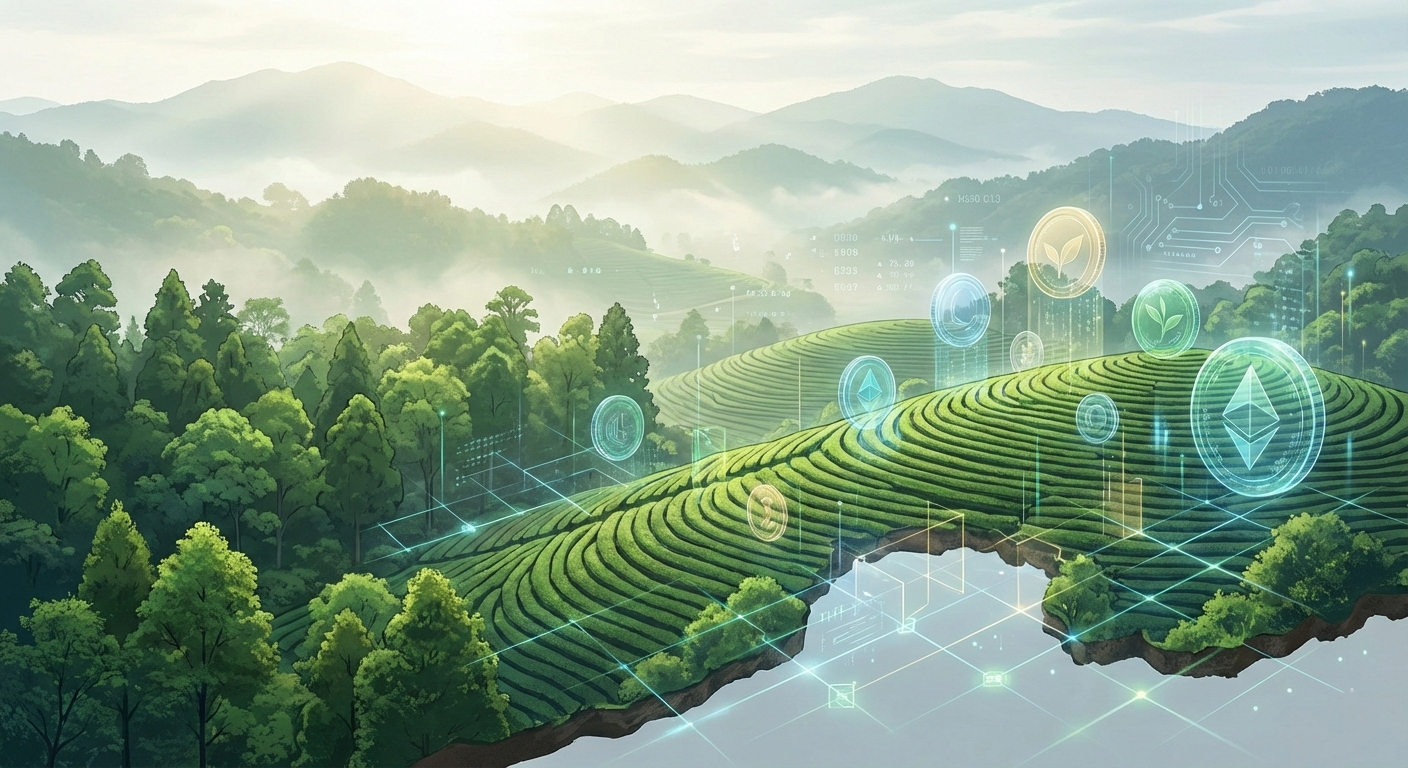

Tokenization Trend Watch: Chinese Firms Turn Tea and Trees Into Digital Assets
Tokenization is no longer limited to cryptocurrencies, stocks, or real estate. In 2025, a new trend is emerging in China as companies begin turning real-world assets like tea plantations and forests into digital tokens. This move highlights how blockchain technology is expanding into agriculture, sustainability, and traditional industries.
By converting physical assets into blockchain-based tokens, Chinese firms aim to improve transparency, unlock new funding channels, and attract tech-savvy investors—both domestically and internationally.
What Is Asset Tokenization and Why It Matters
Asset tokenization refers to the process of converting ownership rights of a real-world asset into a digital token on a blockchain. Each token represents a share or unit of value tied to a physical asset.
Key Benefits of Tokenization
- Improved liquidity: Assets like farmland or forests are traditionally hard to trade
- Transparency: Blockchain records ownership and transactions immutably
- Fractional ownership: Smaller investors can participate
- Traceability: Especially useful for agricultural products
In China, tokenization is being positioned not as a speculative crypto trend, but as a digital infrastructure upgrade for traditional industries.
Tea Becomes a Blockchain Asset
One of the most notable tokenization experiments involves premium tea producers in regions such as Yunnan and Fujian. These firms are issuing digital tokens backed by specific tea harvests or long-term plantation output.
How Tea Tokenization Works
- Each token represents a measurable quantity of tea leaves or future production
- Blockchain records track origin, harvest date, and quality grade
- Tokens can be traded or held until physical delivery
For buyers, this provides authenticity guarantees and supply-chain transparency. For producers, it unlocks early-stage financing without relying entirely on traditional bank loans.
https://goldenraysnews.com/crypto-regulation-debate-heats-up-in-washington-after-weekend-meltdown/
Forest and Tree Assets Go Digital
Beyond agriculture, Chinese companies are also tokenizing forest assets, including commercial tree plantations and reforestation projects.
Tokenized Trees and Carbon Value
Tree-backed tokens are often linked to:
- Timber value
- Carbon sequestration potential
- Sustainability and ESG metrics
Some firms are pairing tree tokens with carbon credits, allowing investors to participate in environmental projects while tracking real ecological impact.
This aligns closely with China’s long-term carbon neutrality goals, making blockchain a tool for both finance and environmental management.
Why Chinese Firms Are Embracing Tokenization Now
Several factors are driving the rapid adoption of asset tokenization in China:
1. Digital Infrastructure Maturity
China already has advanced digital payment systems, supply-chain tracking, and enterprise blockchain platforms, making tokenization easier to implement.
2. Regulatory Clarity (Non-Speculative Focus)
Unlike open cryptocurrency trading, many of these tokenization projects operate on permissioned blockchains and avoid speculative trading features. This aligns better with regulatory expectations.
3. Demand for Alternative Financing
Small and mid-sized producers often struggle to access affordable capital. Tokenization provides a new fundraising pathway without giving up operational control.
Investor Interest and Market Potential
Institutional and private investors are paying attention, especially those interested in:
- Real-world asset (RWA) tokenization
- Sustainable investments
- Diversification beyond stocks and crypto
Unlike volatile cryptocurrencies, asset-backed tokens offer tangible value tied to production or land use. However, liquidity remains limited compared to traditional markets.
https://goldenraysnews.com/is-the-santa-rally-still-coming-for-crypto/
Risks and Challenges to Watch
Despite the promise, tokenization of physical assets carries risks:
Regulatory Oversight
Rules governing ownership rights, cross-border investment, and secondary trading are still evolving.
Asset Valuation
Accurately pricing tea yields or forest growth is complex and subject to climate and market risks.
Technology Trust
Investors must trust that the blockchain records accurately reflect real-world conditions and that audits are reliable.
https://goldenraysnews.com/how-institutions-are-moving-in-crypto-this-week/
Global Implications of China’s Tokenization Push
China’s approach to tokenizing real-world assets could influence global markets. If successful, it may:
- Encourage similar projects in agriculture and forestry worldwide
- Set standards for non-speculative blockchain use cases
- Bridge traditional industries with digital finance
This trend also highlights a broader shift: blockchain is increasingly viewed as infrastructure, not just a financial experiment.
Outlook — From Digital Experiments to Mainstream Adoption
Tokenizing tea leaves and trees may sound unconventional, but it reflects a serious effort to modernize traditional sectors. As technology matures and regulations become clearer, asset tokenization could become a standard tool for funding, transparency, and sustainability.
For investors and observers, this trend is worth watching closely. It represents the next stage of blockchain adoption—quietly transforming real-world industries, one asset at a time.









25 comments
Thanks for all
thanks for sharing🎄⛄
Thanks.
Thanks
Done
Thanks for your article.
Interesting concept of asset tokenization on the blockchain platform: In reality, It’s “All about Numbers”.
Thanks for watching
Thanks
🏵🏵🏵🌾🌾🌾
Thanks for your interesting article 🌿🌱
D🍀
Thanks for your sharing 🍁🍁
🥰v. Interesting
Thanks a lot🥰
So grateful 🥰
🥰🥰🥰
🍀🍀🍀🍀🍀
26-12-25
Thanks
🥰👍👍👍
Okay
🖖🖖🖖🖖🖖🖖💥💣💣
Study again.
Thanks
Good